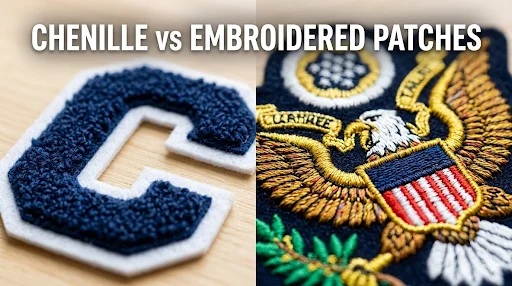
If you’re stuck on Chenille vs Embroidered Patches, you’re not alone. They’re both “classic,” but they do totally different jobs.
Chenille is the fuzzy varsity look. It’s loud, textured, and built for big shapes. Embroidery is cleaner and more precise. It’s the safe pick for logos, uniform patches, and anything that needs crisp detail.
If you’re ordering a custom chenille patch from a renowned patch maker for jacket, spiritwear, or a streetwear drop, this guide will help you choose fast without overthinking it.
The Core Difference You Can See in One Second
Chenille
- Raised, fuzzy yarn texture on a felt base
- Best for bold letters, numbers, and simple icons
- Looks premium when it’s big and clean
Embroidered
- Thread stitching that can stay relatively flat or moderately raised
- Better for detailed logos, outlines, and smaller text
- More flexible across different patch sizes
If your design is basically a big letter or a short word, chenille is in its element. If your design has detail or small text, embroidery usually wins.
What Are Chenille Patches Used For?
If you’re literally asking, What Are Chenille Patches Used For? Think big, classic, and wearable:
- Varsity letters on letterman jackets
- Team initials and numbers on spiritwear
- School clubs, campus orgs, alumni drops
- Cheer and dance jackets
- Streetwear pieces that need texture
Chenille Patches doesn’t try to be “sharp.” It tries to be bold.
Where Custom Chenille Patches Win Hard
1) Varsity and letterman jackets
Chenille is the default here for a reason. The fabric can support the patch, and the look is already part of the culture.
Chenille wins when you need
- Large letters
- Team numbers
- Simple sports icons
- Achievement patches that look like awards
2) Spiritwear and team merch
Chenille looks “official” even on a simple hoodie. It gives depth without needing crazy artwork.
Best placements
- Chest letters
- Sleeve badges
- Large back patches on jackets
3) Streetwear drops
One bold letter, a clean wordmark, or a simple icon in chenille can carry the whole garment. It reads as quality fast.
Smart move:
Add embroidery outlines if your chenille shape needs sharper edges.
Where Embroidered Patches Win Hard
1) Detailed logos
Embroidery handles complexity better. It’s still not perfect for tiny text, but it’s far more forgiving than chenille when details matter.
2) Uniform patches
Uniforms need consistency, clean edges, and reliability. Embroidered patches are the usual pick for:
- Company logos
- Name patches
- Department identifiers
- Crew and staff patches
3) Smaller patch sizes
Chenille needs space. Embroidery can stay readable at smaller sizes, especially with simplified artwork.
The “Design Reality” Test
Here’s a simple way to decide without getting fancy.
Pick chenille if your design is:
- Bold
- Simple
- Mostly letters or big shapes
- Meant to feel textured
Pick embroidery if your design has:
- Small text
- Thin strokes
- Detailed icon work
- Multiple elements that must stay clear
If your logo is detailed but you want chenille, don’t force it. Do a hybrid:
- Chenille for the main shapes
- Embroidery for outlines or text
That combo looks expensive and stays readable.
Durability and Wear
Both can last, but they wear differently.
Chenille wear pattern
- Holds up well on jackets and heavier garments
- Can look tired faster if it’s constantly rubbed or heavily washed
- Texture can flatten over time if abused
Embroidery wear pattern
- Ages more evenly
- Handles regular wear and washing better in most cases
- Better for workwear and daily uniform use
If the patch is going on something that gets washed nonstop, embroidery is usually the safer bet. If it’s going on a varsity jacket or a premium hoodie, chenille can last a long time if cared for properly.
Backing Choices Matter More Than People Admit
A beautiful patch with the wrong backing turns into a problem.
- Sew-on works best for long-term wear and heavy garments
- Iron-on can work for quick application on heat-safe fabrics
- Hook and loop works when you need removable patches
If you want a full breakdown of backing types and other stuff related to patches, keep this guide handy: Custom Patches Breakdown: Types, Backings, Borders & More!
Quick Look!
| Feature | Chenille | Embroidered |
| Best Look | Varsity, plush texture | Clean, classic stitched logo |
| Best For | Letters, numbers, simple icons | Logos, outlines, uniforms |
| Detail Handling | Low | Medium to high |
| Small Text | Not ideal | Possible if simplified |
| Best Garments | Jackets, hoodies, heavywear | Uniforms, jackets, hats, workwear |
| Typical Feel | Bold, trophy-like | Official, professional |
How to Choose Fast Without Regretting It
Ask yourself these four questions:
- Is the design bold enough for chenille
- Does it include small text or fine details
- What garment is it going on and how often will it be washed
- Do you want texture as the main feature or just a clean logo
If you want bold texture, go chenille. If you want clarity and flexibility, go embroidery. If you want both, go hybrid and keep moving.
Frequently Asked Questions
Pick the Patch That Fits the Job
If the goal is bold texture and that varsity feel, Custom Chenille Patches are the move. If the goal is a clean, readable logo that works across uniforms and smaller sizes, embroidery is the safer lane.
Want a quick recommendation without guessing? Share the logo, where it’s going, and the size. You’ll get a clear “chenille, embroidery, or hybrid” answer before you commit to production.